
The Seven Volcanic Summits
List Trips
Climbing the highest volcano on each of the seven continents
Climbing the Seven Summits (the highest peak on each of the world's seven continents) is becoming an increasingly popular objective for climbers. Some people are starting to look for new challenges with a similar theme. One alternative is to climb the highest volcano on each of the seven continents, a project known as the Volcanic Seven Summits.
Some of these peaks are popular with both international and local climbers. The climbing routes are well established and information is easy to find. Others are more obscure: information is harder to find and access harder to arrange. For several of these peaks different heights are quoted by different sources and there is little consensus as to what the most accurate figure is. There is even some dispute about the Asian summit. Most sources are happy to identify Damavand in Iran as the highest volcano in Asia, however there are questions about whether some volcanic vents on the Tibetean plateau should be considered instead
As more people become interested in climbing these peaks it is likely that a consensus will emerge on all the summit heights. However only time will tell if the seven peaks listed above will continue to be regarded as the highest summit of volcanic origin on each continent.
As more people become interested in climbing these peaks it is likely that a consensus will emerge on all the summit heights. However only time will tell if the seven peaks listed above will continue to be regarded as the highest summit of volcanic origin on each continent.
Those attempting to complete the Volcanic Seven Summits face a different set of challenges and rewards from the classic Seven Summits experience. With the absence Everest and Denali the volcanic peaks are undoubtedly an easier to set to climb. Visiting all seven involves travelling to some remote parts of the world well beyond the conventional tourism destinations. None of the volcanoes are particularly hard to climb, although Ojos del Salado is high, and Antarctica&rqsuo;s Mt Sidley is cold. Five of the peaks can be climbed in a two-week vacation. ‘Ojos&rqsuo; may take a little longer due to acclimatisation requirements and Sidley can take longer due to the unpredictability of flying in Antarctica. It should be possible to complete each of these two climbs within a three week time slot. With one exception, it could be said that the Volcanic Seven Summits can be climbed on a reasonable budget, by people without exceptional fitness levels. That exception is Mt Sidley in Antarctica. The cost of getting to Antarctica means that this will always be an expensive mountain to climb. Currently the cost is around USD $60,000 and this may increase in the future.
Read more about The Seven Volcanic Summits »
Kilimanjaro - Umbwe Route
The Umbwe (pronounced "Um-bway") Route is rarely climbed and provides a very direct route up the southern aspect of Africa's highest mountain. The trail has fewer people on it than any other route on Kilimanjaro. You will acclimatise first on nearby Mount Meru (4,556m)
Difficulty
Prices
from £4,995.00 from £3,995.00 Deposit £350.00Duration
13 NightsRegion
Africa
Kilimanjaro - Lemosho Glades
Kilimanjaro is a superb challenge for fit walkers. Our 11-day trek via the Lemosho Glades is designed to optimise acclimatisation, giving you a greater chance of reaching the top. Optional Safari extension.
Difficulty
Prices
from £3,795.00 from £2,795.00 Deposit £250.00Duration
11 NightsRegion
Africa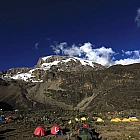
Kilimanjaro - Western Breach
The Umbwe Route, followed by the Western Breach, is undoubtedly the most exciting route to the top of Kilimanjaro that does not require the use of ropes. You acclimatise first on nearby Mount Meru (4,556m). Optional Safari extension.
Difficulty
Prices
from £4,795.00 from £3,795.00 Deposit £350.00Duration
13 NightsRegion
Africa
Ojos del Salado
Ojos del Salado is the second highest peak in South America after Aconcagua. It is also the world's highest volcano and the second highest mountain on earth outside the Himalayas.
Difficulty
Prices
from £5,750.00 from £4,595.00 Deposit £995.00Duration
18 NightsRegion
South America
Mexican Volcanoes
This expedition is a fine introduction to mountaineering at higher altitudes for those with limited time. In just over two weeks, you climb three major summits and explore some of the interesting culture of Mexico. It includes an ascent of Orizaba - North America's highest volcano.
Difficulty
Prices
from £4,095.00 from £3,095.00 Deposit £350.00Duration
15 NightsRegion
North America
Mount Sidley
Be among the few to have climbed Antarctica's highest volcano and one of the Volcanic Seven Summits. Join the ultimate mountaineering expedition to Mount Sidley 4,285m and stand atop one of the most remote summits on earth.
Difficulty
Prices
from $76,250.00 Deposit $6,500.00Duration
12 NightsRegion
The Cold RegionsThe Volcanic Seven Summits
- Kilimanjaro
- Ojos del Salado
- Pico de Orizaba
- Giluwe
- Elbrus
- Damavand
- Mount Sidley
The Volcanic Seven Summits (listed in descending height order)
South America — Ojos del Salado
- Altitude: 6,893m
- Country: Argentina / Chile
- Time to visit: December - February (summer)
Nevado Ojos del Salado is an active neovolcano in the Andes sitting astride the Argentina/Chile border. It is located in the high Atacama with an extremely dry desert climate and little precipitation. In the climbing season the days are mostly bright and clear with freezing cold nights. 'Ojos' is the highest mountain in Chile and the highest volcano of the world. After Aconcagua (6962 meters) it is the second highest peak in South America and the Western hemisphere. Ojos del Salado is a massive desert mountain offering the perfect blend of wilderness adventure and high-altitude mountaineering in solitude, overlooking a boundless landscape.
'Ojos' is far less popular than Aconcagua, although it is only slightly lower. Given the relatively short climbing season it is possible to meet other parties on the mountain, but this remains a remote mountain visited by few climbers. There is a basic shelter at base camp plus another higher on the mountain, but most parties would be advised to take their own tents. The climb to the summit is mostly trekking except for the last part, which is a difficult scramble that may require use of rope as the rock can be loose and rotten and there may be snow. At the height of the summer there should be almost no snow on the ground. Cold is the main challenge. Footwear and clothing should be chosen with this in mind.
Africa — Kilimanjaro
- Altitude: 5,895m
- Country: Tanzania
- Time to visit: Jan-Mar and June-October (dry seasons)
The dormant giant stratovolcano Kilimanjaro in north-eastern Tanzania has three summit cones: Kibo (5895 meters), Mawenzi (5148 meters) and Shira (3962 meters). The currently inactive volcano is the highest mountain in Africa, the fourth highest of the Seven Summits and the second highest of the Volcanic Seven Summits. The highest point on Kibo's crater rim is called Uhuru Peak, which means 'freedom peak' in Swahili. Kilimanjaro is one of the world's most recognizable and iconic peaks. Witnessing the sunrise over the African plains from its summit is an unforgettable experience.
This is probably the most frequently attempted mountain of its size in the world. There will always be many parties climbing, exhibiting varying levels of competence and fitness. It is possible to avoid the worst of the crowds by visiting outside the busiest periods or by climbing one of the less frequented routes. If using the most popular route it is obligatory to stay in huts that are often crowded. The less frequented routes are more expensive and require the use of tents but are usually more pleasant. Light boots should be adequate for all routes.
Asia — Damavand
- Altitude: 5,671m
- Country: Iran
- Time to visit: June-Sept (summer hiking season) Mar/April (Spring ski season)
Damavand is a superbly shaped stratovolcano in the central Alborz range near the Caspian Sea. It and the highest peak in Iran and is located a short distance north of the capital city, Tehran. Damavand has a special place in Persian mythology and is the highest volcano in Asia and the Northern hemisphere. The mountain is potentially active. The ground on the summit is warmed year round by volcanic activity and this can melt the winter snows. Yellow sulphur deposits are found on the ground near the summit and sulphurous gasses can be smelt leaking through cracks in the rocks. A climbing trip to Iran combines an interesting ascent of Damavand with a chance to experience the rich and varied history and culture or Persia
Damavand has long been popular with Iranian hikers, and the number of international visitors is growing. There is a basic hut at base camp, plus one higher on the mountain, that can be relied upon during the 'off season' but it is essential to take tents if visiting during the popular season. In the early summer there may still be some snow on the ground in places but this should normally be a scree walk possible in light boots.
Europe — Elbrus
- Altitude: 5,642m
- Country: Russia
- Time to visit: June-Sept (summer hiking season) Mar/May (Spring ski season)
Elbrus is an inactive, heavily glaciated twin-peaked stratovolcano in the western Caucasus. The west summit stands at 5642 metres, the east summit is slightly lower at 5621 metres. Elbrus is the highest mountain in Russia and has a permanent summit ice cap feeding numerous glaciers. It is the highest volcano in Europe and therefore one of the Seven Summits as well as the Volcanic Seven Summits. Whether you travel through Moscow or St Petersburg there is plenty to see and do while travelling to/from Elbrus. From the summit there is a magnificent view of the Caucasus chain spread out along the southern horizon.
Historically most ascents have been made from the south side of the mountain where there is an infrastructure of hotels, ski lifts and mountain huts. If your agent or guide can secure bookings in the huts they are adequate. A more scenic climb can be made from the north side of the mountain but this requires carrying tents and often leads to a longer summit day than is normal on the south side. In the summer season this mountain is fairly popular with climbers from around the world. Strong winds can scour the surface snow from the upper reaches of the mountain leaving an icy surface. In these conditions good crampon technique is required.
North America — Pico de Orizaba
- Altitude: 5,610m
- Country: Mexico
- Time to visit: November - March (dry season)
Pico de Orizaba, also known by its Aztec name Citlaltepetl, is a beautiful stratovolcano and the highest mountain in Mexico as well as the highest volcano in North America. It is the third highest mountain in North America after Denali (Mt McKinley) in Alaska 6194 m and Mount Logan in Canada 5959 m. Pico de Orizaba is visible from afar and it is known as one of the most prominent volcanic peaks in the world, after Africa's Kilimanjaro. It is possible to see the ocean in the Gulf of Mexico, about 110 kilometers away, from the summit. The climbing is interesting and the peak is rarely crowded. A trip to Orizaba combines a chance to appreciate the history and culture of Mexico with a worthwhile mountain objective.
This peak is popular with local Mexican climbers particularly at the weekends as it can be reached in a few hours drive from Mexico City. The summit can be climbed in a single day from the Piedra Grande hut. This hut is often full so it is worth taking a tent. Warm boots and good crampon technique are required on the summit slopes, particularly if conditions are icy.
Australasia/Oceania — Giluwe
- Altitude: 4,368m
- Country: Papua New Guinea
- Time to visit: It is possible to climb year round, but rainfall is heaviest May-Sept
Giluwe is an old eroded shield volcano and the highest volcano in Papua New Guinea. Giluwe has the distinction of being the highest volcano in Oceania and on the Australian continent. Most geographers recognise the island of New Guinea is an integral part of the Australian continent. In regard to the definition of Oceania, which adds New Zealand and Polynesia including Hawaii, Giluwe remains the highest volcano since it exceeds the elevation of Mauna Kea in Hawaii and any volcano in New Zealand. The highlands of PNG are far from any tourist trail and facilities for visitors are basic. Meeting people who have only recently come into contact with the outside world is the highlight of a visit to PNG.
This peak is only visited by a few groups each year. A local agent can organise travel to the mountain, hire porters and smooth relations with local villagers. It is a long day's hike from the roadhead to the camp below the peak, firstly through 'jungle' and latterly across grasslands. The route to the summit climbs steep grass slopes that can be hazardous when wet. Light, but waterproof, footwear should be adequate.
Antarctica — Mount Sidley
- Altitude: 4,285m
- Country: Antarctica
- Time to visit: Dec-Jan (Antarctic summer)
Mount Sidley is the highest peak of the Executive Committee Range in the interior of the Polar Plateau. This region is still almost unknown even among mountaineers. It was first climbed by scientists working for the US Antarctic Programme in 1990. Mount Sidley is a huge and remote mountain set on the flat white expanse of Marie Byrd Land on the West-Antarctic Sheet. This majestic snow-covered peak features a five kilometers wide caldera and a deep, sheer walled amphitheater. Blue ice slopes guard the upper mountain and fantastical bizarre snow "mushrooms" sprout along the upper ridge and the crater rim. Mount Sidley's spectacular remote setting, as well as the interesting and varied climbing, make it a very exciting destination for adventurous mountaineers.
Antarctic Logistics and Expeditions (ALE) are the only organization with the ability to get climbers to this extremely remote location. They provide a full service expedition operating out of Punta Arenas in Southern Chile. Several of the world&rqsuo;s leading guiding companies work with ALE to offer expeditions to Mt Sidley. A full set of Antarctic mountaineering clothing and equipment is needed for this expedition. This is similar to the items needed for climbing a Himalayan 8,000m peak.
There are several sources of information about the Volcanic Seven Summits:
https://en.wikipedia.org/wiki/Volcanic_Seven_Summits
http://www.summitpost.org/volcanic-seven-summits/171202
http://www.volcanolive.com/summits.html


